

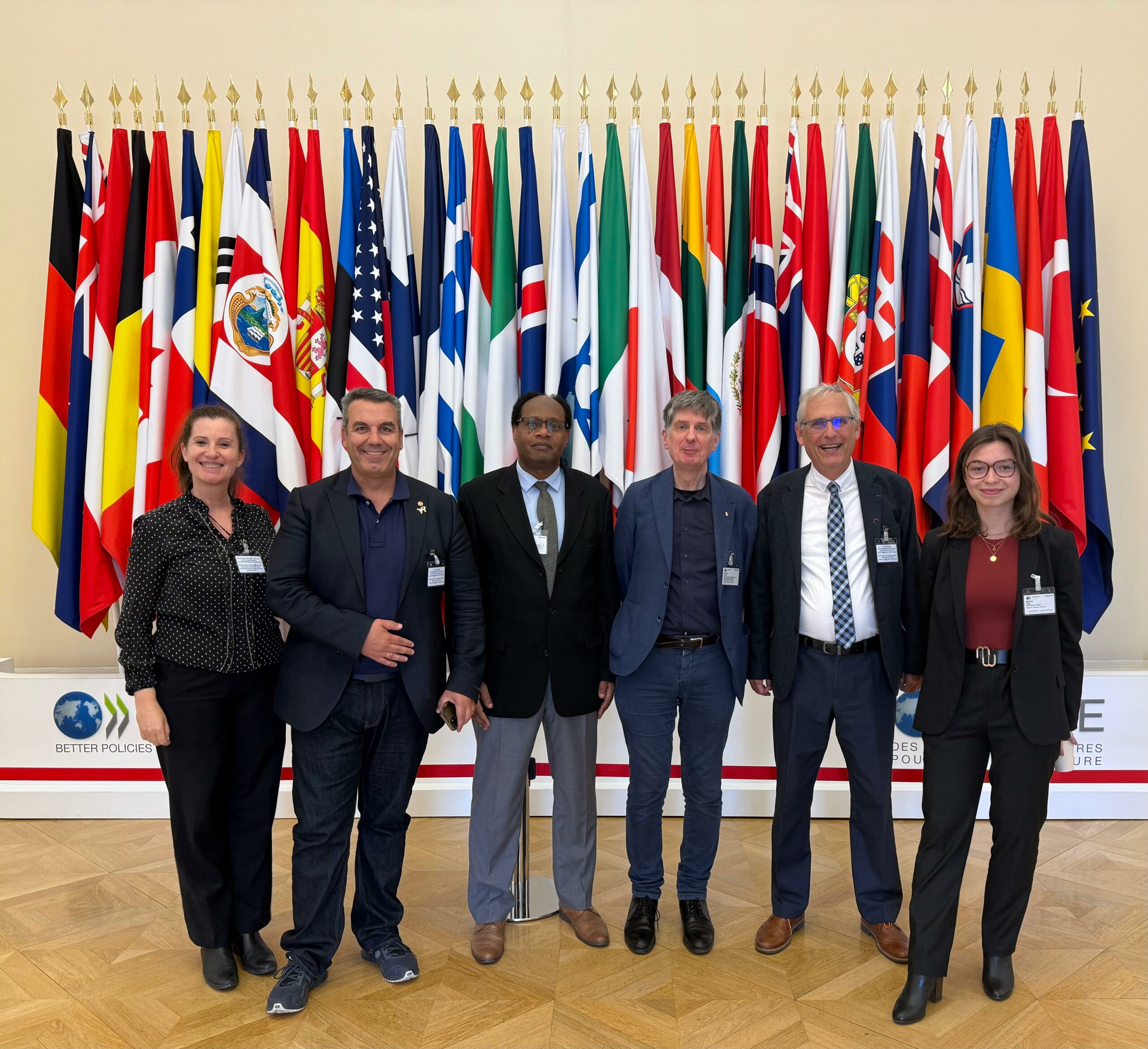
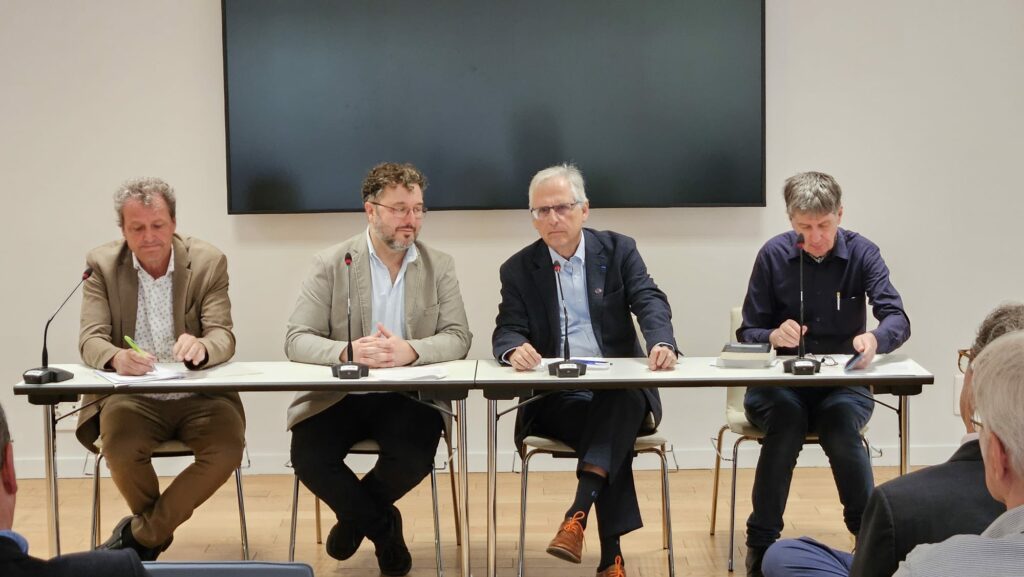
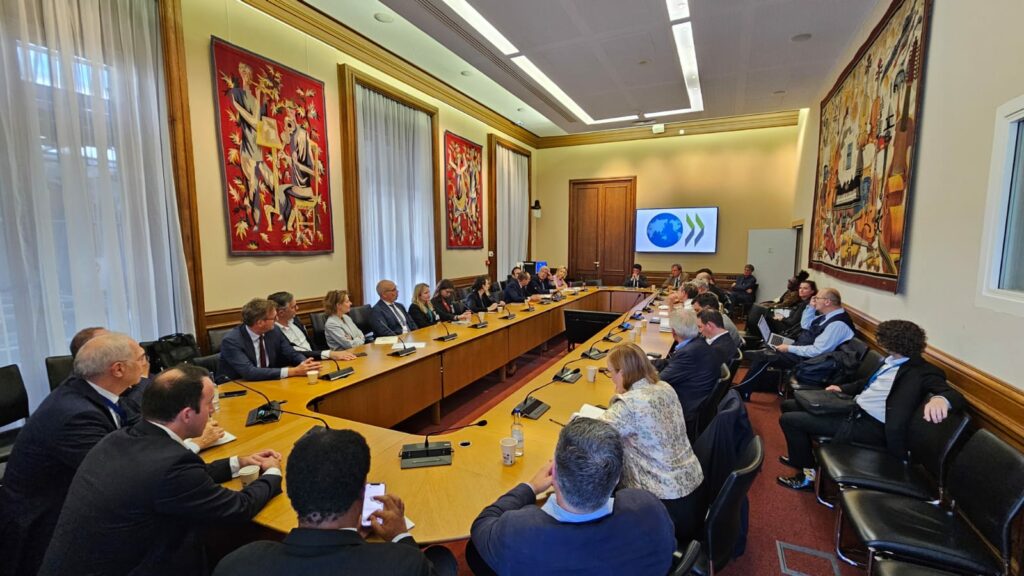
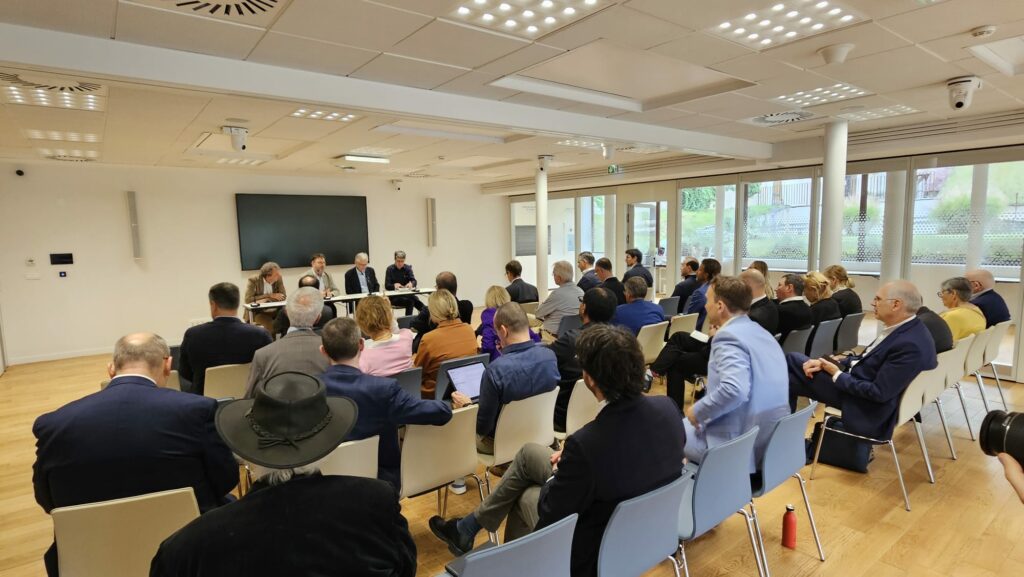
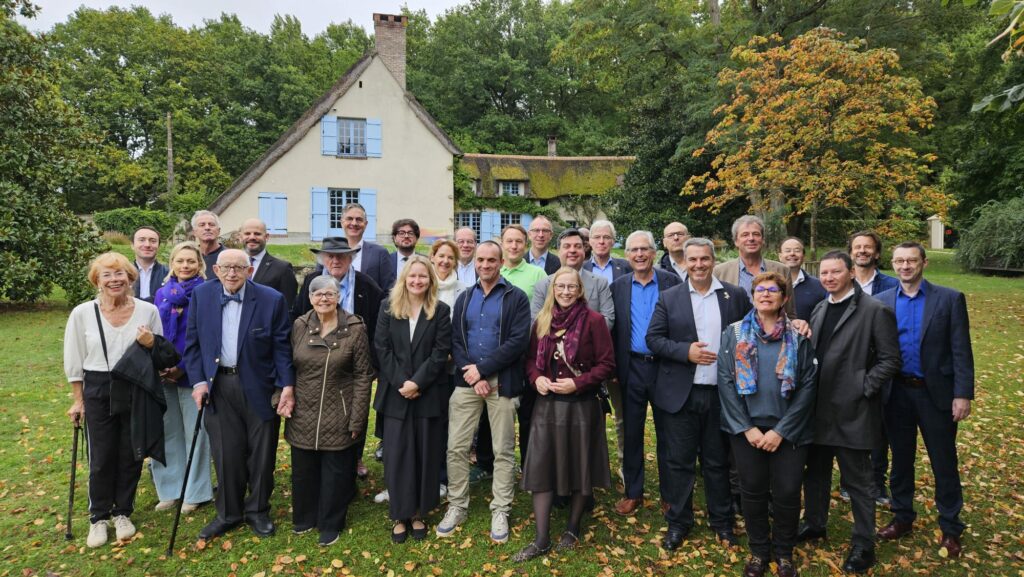
On 13 and 14 September 2025, the Maison Jean Monnet hosted the Houjarray Foresight Talks bringing together experts and members of European civil society. These two days of work on the theme of« topic Innovation, Power and Diplomacy in an age of permanent polycrisis. Where is the World heading to and what place is in it for the EU and Europe? »The following statement was produced.
A roadmap for vision and action
«I’ve never lacked the opportunity to act. The most important thing is to be prepared. For that, I need a conviction, formed by long reflection. When the moment comes, everything is simple, because necessity leaves no room for hesitation.»
Jean Monnet
Promoting peace has always been at the heart of European integration, and today the European Union aims to promote European values, progress, stability, security and the well-being of its citizens. From the Treaty of Rome to the Treaty of Lisbon, the European Union has evolved, confronting and adapting to numerous crises and challenges. However, Europe is now at a historic turning point. Security, trust, climate and the rule of law are under pressure, citizens feel increasingly alienated from institutions, young people are disengaged and cohesion between Member States is fragile. With globalisation weakening, war on our borders and the transatlantic alliance less reliable, the Union must be ready to act as a sovereign power in a less stable world order. If we fail to act, irrelevance and fragmentation lie in wait.
We share the common dream of a European Union that protects the health, safety and climate of its citizens; a Union that unites across borders and generations in solidarity and resilience; a Union that defends democracy by winning trust through honesty, clarity and accountability; and a Union that builds a resilient and sustainable economy, able to compete without sacrificing its values or its soul. This vision cannot be achieved by the institutions alone. It must be shaped by our citizens and, above all, by the imagination and strength of our young people. Their vision and their demands for dignity, justice and sustainability must guide our European Union. Only by placing their dreams at the heart of our action will the European Union find the courage to act, the legitimacy to lead and the unity to endure.
To transform this vision into reality, we affirm four core objectives :
- Europe must rebuild trust by delivering safety and inclusive opportunities for citizen participation.
- Europe must secure its industrial autonomy by producing critical materials, emerging technologies, and energy independently and sustainably.
- Europe must remain a global actor by forging partnerships grounded in fairness, solidarity, and respect for a rules-based and climate-responsible order².
- Europe must safeguard the rule of law, protecting democracy and human rights; and hold all institutions accountable for this.
Rebuilding trustrequires strengthening our communication and education systems. In an era of digital disruption, with misinformation and disinformation threatening democratic cohesion, Europe needs an independent EU‑wide media infrastructure, strict transparency in digital platforms, and widespread media literacy. Communication must be clear and accessible, adhering to Jean Monnet’s principle : Policies must be communicated in clear and accessible language, without losing precision. This approach also addresses the current reliance on national mediation, which often distances citizens from the European project.
Education must highlight Europe’s common history, climate responsibility, and solidarity, while ensuring that the voices of workers, minorities, younger generations and underrepresented groups are heard. This is not only about transmitting knowledge but about building a shared sense of belonging and citizenship.
Solidarity and preparedness must be visible in times of crisis. The COVID-19 pandemic revealed fragmentation in health readiness⁴, while the war in Ukraine exposed vulnerabilities in defence and solidarity. Europe must strengthen transnational mechanisms to respond jointly to pandemics, natural disasters, and defence emergencies. Accountability of decision-makers must be expanded to prevent power abuse and restore citizens’ confidence.
For these reasons, Europe should also take a step forward by promoting «Sisu» in civil and military preparation. The European Union should create clusters of strategic capabilities in all Member States in order to create strategic interdependence and spend common defence and innovation funds efficiently, harmonise public procurement and increase innovation funding. Research and industry must work together on disruptive technologies, from AI to biotechnology and cyber security, quantum innovation and defence.
National ministers dedicated to resilience should be appointed, and EU institutions strengthened to combat propaganda and disinformation. Financing mechanisms such as the European Investment Bank’s initiatives must be scaled up, complemented by new tools that attract private funds into defence and security innovation.
A broader European Defence Area should include not only EU members but also close partners such as Ukraine, Norway, the UK, Canada, and Switzerland, ensuring collective resilience and coordinated response to threats in a more volatile world.
Facing the climate crisis requires honesty and urgency. The Intergovernmental Panel on Climate Change has warned that the risks are structurally underestimated; Europe is already facing increasing climatic oscillations due to the weakening of the Atlantic meridional overturning circulation, the melting of glaciers, the destabilisation of permafrost, water scarcity - which threatens agriculture, energy and daily life - and rising sea levels which threaten and endanger the very existence of low-lying regions. These are not distant threats, but realities that are becoming reality. Our energy systems cannot be powered by renewables alone. Without major technological advances, such as advanced thorium technology, large-scale storage and revolutionary system innovations, Europe will not be able to meet its needs. Beyond energy, the collapse of natural systems is accelerating migratory pressures, destabilising societies and amplifying geopolitical risks. It is imperative to rethink the European Union so that it can act with foresight, coherence and ambition.
Leaders must speak openly about the trade-offs between climate action, defence, and welfare spending. Accelerating the energy transition requires investment in renewables, advanced storage, circular industries, and innovation in nuclear alternatives. Climate policy must protect current and future generations, extending solidarity across time. Sustainability should not be framed as a burden, but as an opportunity to give Europe pride in leading the global green transition.
Closing Reflection: European Union must redesign itself to protect its citizens, unite its people, and lead the preservation of the planet. Security and preparedness are the Union’s shield. Trust, unity and democracy are its glue. Climate and sustainability are its promise for future generations. Innovation and education are its path forward. Together, they define a united Europe that delivers dignity, security, and dreams — a Europe worth building and defending.
- As result of the Houjarray Foresight Talks 2025 organised by the Jean Monnet Association in the House of Jean Monnet, on the topic Innovation, Power and Diplomacy in an age of permanent polycrisis. Where is the World heading to and what place is in it for the EU and Europe?
- Human dignity, freedom, democracy, equality, rule of law and human rights
- “We don't unite states, we unite people”, Jean Monnet
- Jean Monnet Driver's test: Jean Monnet used to consult with his driver about the decisions to be taken in order to check that he fully understood them, so that these could be communicated in a way that the population could understand.
- Sisu: Finish word for perseverance and determination. Refers to a profound national character trait encompassing stoic determination, resilience, courage and tenacity in the face of adversity.
- Thorium technology involves using the abundant element thorium as a nuclear fuel source, primarily in molten salt reactors (MSRs) or High-Temperature Gas-Cooled Reactors (HTGRs). This approach offers potential benefits such as a greater fuel supply, reduced production of long-lived radioactive waste compared to uranium, and improved safety through the use of liquid fluoride salts as coolant and fuel.
Signatories
- Philippe Laurette (President of the Jean Monnet Association)
- Miguel Ángel Martin Ramos (Vice-president of the Jean Monnet Association)
- Fabien Chevalier (Secretary of the Jean Monnet Association)
- Julia Mariau (Deputy Secretary of the Jean Monnet Association)
- Matthias Waechter
- Elizabeth Kuiper
- Michele Migliori
- Amaryllis Verhoeven
- Hans van der Loo
- Wenka Weber
- Miquel Saco
- Ernest Sagaga – Africa Centre for International Relations
- Olivier Védrine – AJM
- Patrick Martin-Genier – AJM
- Mohamed Diawara – AJM
- Wouter van Dieren – Club of Rome
- Inis Vitrin Club of Rome
- Tanja Joona – Professor of Arctic Sustainability Science
- Erik van Noort – Copper Lavender
- Yevgen Rokytskyi - Co-Chairman of the Supervisory Board Ukrainian Spacetech Innovation Clusters’ Alliance and Co-Chairman Ukrainian Defence and Security Industry Association
With the support of Maison Jean Monnet and CIFE.
 French
  English
  German
  Spanish
  Italian
  Portuguese
  Polish
  Ukrainian